
IP67 vs IP68: What's the Difference? A Complete Guide to Phone Water Resistance
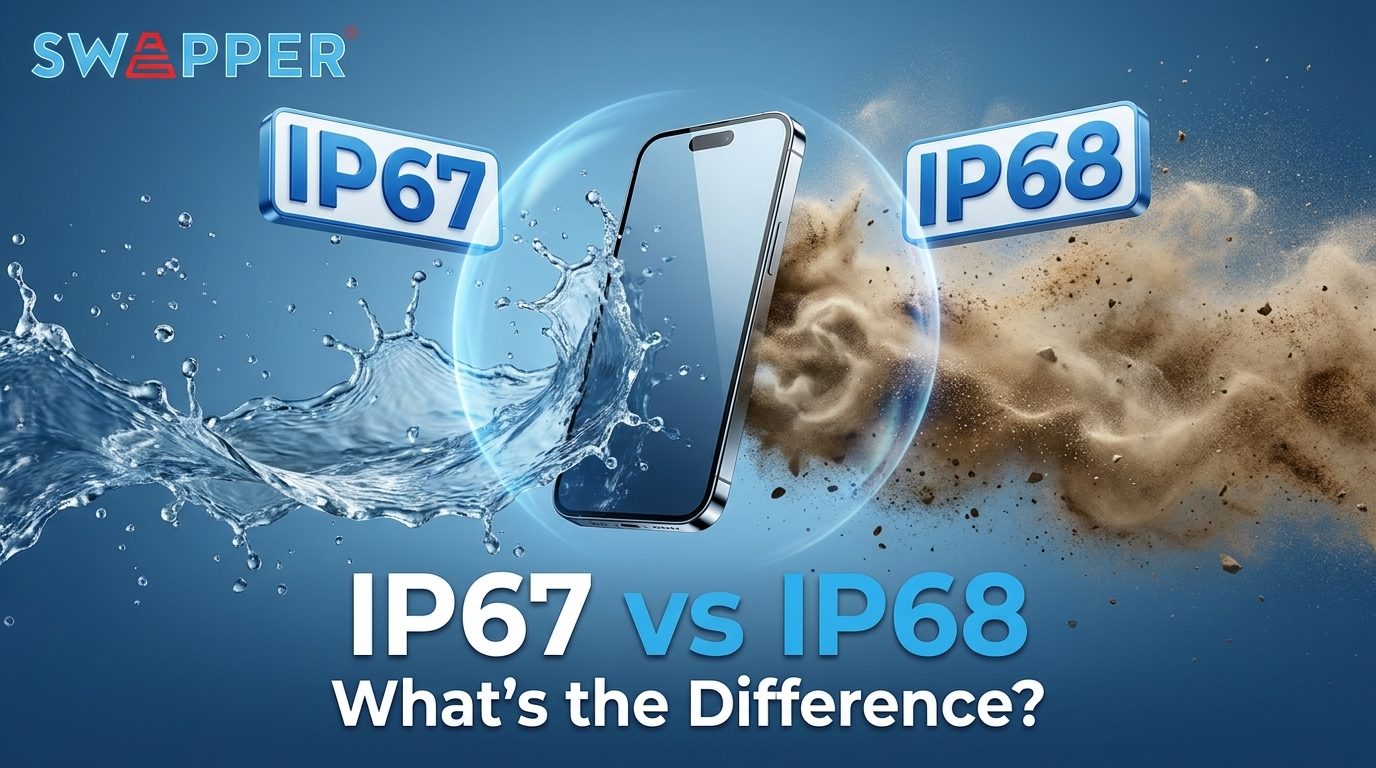
When shopping for a smartphone, you may have noticed terms such as IP67 or IP68 listed in the specifications. These numbers can look confusing at first, but they are actually part of a standard system used to describe how well a device is protected against dust and water.
Understanding the IP67 vs IP68 difference can be useful if you often use your phone outdoors, near water, or in environments where your device may be exposed to dust and moisture.
But is IP68 automatically better than IP67? And does an IP68 rating mean your phone is completely waterproof?
Let's break down what these IP ratings actually mean.
2. What Is IP67?
IP67 means the device has a high level of protection against dust and is designed to withstand temporary immersion in water under specified testing conditions.
The first digit, 6, indicates dust-tight protection. The second digit, 7, indicates protection against temporary immersion in water.
This can provide useful protection if your phone is accidentally exposed to water. For example, an IP67-rated phone may be better equipped to handle certain accidental water incidents than a phone without a water-resistance rating.
However, you should not interpret IP67 as meaning that you can use your phone underwater without restrictions. Water resistance depends on the conditions of exposure, and manufacturers may provide additional limitations in their product documentation.
See how an IP67 rating protects against dust and temporary water immersion under specified testing conditions.
Stage 1: Dust protection
3. What Is IP68?
IP68 provides the same highest dust-protection level represented by the first digit, while the 8 indicates protection against water immersion under conditions specified by the manufacturer or applicable testing requirements.
This means an IP68 waterproof phone generally offers a higher level of rated immersion protection than an IP67 device.
However, the exact water-depth and duration conditions for IP68 can vary between products. Therefore, you should always check the manufacturer's specifications instead of assuming that every IP68 smartphone has identical water resistance.
For buyers, this is one of the most important things to understand when comparing IP67 vs IP68. The number 8 does not mean every IP68 phone can automatically survive the same depth, duration or type of water exposure.
Protection against temporary immersion in water under specified testing conditions.
Protection against continuous immersion under conditions specified by the manufacturer or applicable testing requirements.
*Important: IP68 does not specify one universal depth or duration for every smartphone. Actual water-depth, duration and testing conditions vary by manufacturer and product. Always check the official specifications for the specific device.
4. IP67 vs IP68: What's the Difference?
So, what is the actual IP67 vs IP68 difference? The biggest difference is the second digit, which represents water protection.
Both ratings provide the highest dust-protection level represented by the number 6. However, IP68 is designed for a higher level of protection against water immersion than IP67.
5. Is IP68 Better Than IP67?
If you are comparing IP67 vs IP68, it is easy to assume that IP68 is always the better choice.
From a water-resistance perspective, IP68 provides a higher rated level of immersion protection. This can be beneficial if your phone is more likely to encounter water.
However, IP rating should not be the only factor when choosing a smartphone.
A phone with IP68 may still have limitations around salt water, chlorinated water, hot water or prolonged exposure. Water resistance can also change over time because of wear, physical damage or repairs.
Therefore, think of an IP rating as one part of a phone's protection, rather than a guarantee that your device cannot suffer water damage.
Besides water resistance, smartphone security is another important consideration when choosing a device. For more information, see our guide on Android phone security and phone hacking .
Select the feature that matters most to you to see why it should be considered alongside an IP rating.
IP68 provides a higher rated level of water-immersion protection than IP67. However, the exact depth and duration depend on the manufacturer's specifications.
Remember: IP68 is specifically about ingress protection. It does not measure how well a phone handles drops, scratches or battery performance.
Which IP Rating Should You Choose?
For most smartphone buyers, both IP67 and IP68 can provide useful protection against everyday exposure to dust and water.
If you frequently spend time outdoors or around water, an IP68 smartphone may provide greater peace of mind because it generally offers a higher level of rated immersion protection.
If you're choosing between otherwise similar phones, IP68 can be an advantage. But don't pay a large premium solely because of the IP rating unless you actually need the additional protection.
Other factors such as camera quality, battery life, performance, display, storage and overall price may have a much bigger impact on your everyday experience.
Answer a few quick questions about how you use your phone to see which IP rating may suit your needs.
Final Verdict: IP67 vs IP68
The main difference between IP67 vs IP68 comes down to water-immersion protection. Both provide the highest dust-protection rating represented by the number 6, while IP68 offers a higher level of rated protection against water immersion than IP67.
However, neither rating should be interpreted as a guarantee that your phone is completely waterproof.
When buying a smartphone, consider the IP rating, but also look at the manufacturer's specific water-resistance conditions, physical durability, battery life, camera capabilities and overall value.
Ultimately, the best choice depends on how you use your phone. If you simply want protection against everyday splashes and accidental exposure, IP67 may be sufficient. If you want a higher level of rated water-immersion protection, IP68 is the stronger option.